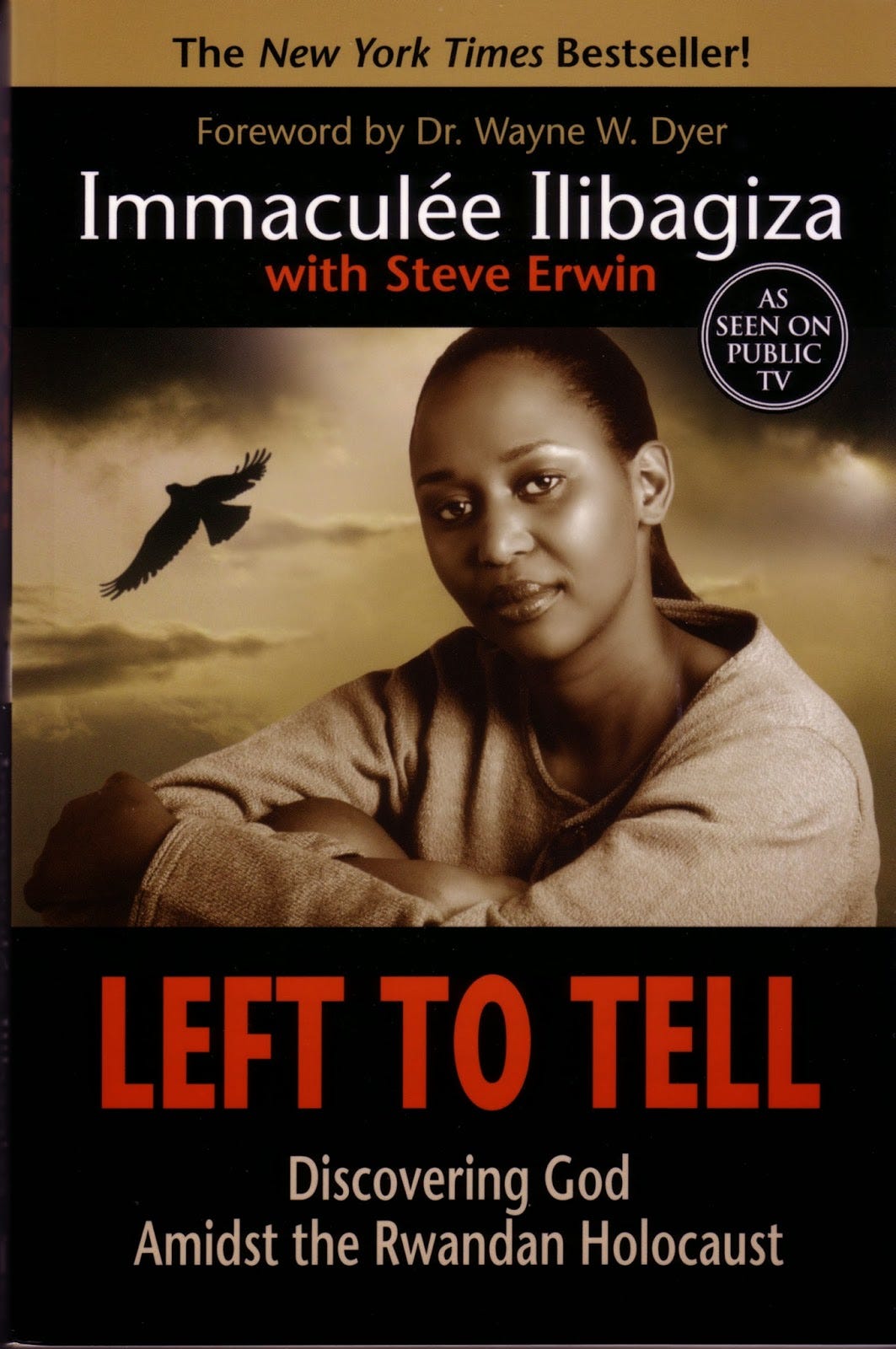

When the book “Left to Tell” by Immaculée Ilibagiza was published in the early 2000’s, I read it with great interest! This biography is on the life of Immaculee Ilibagiza with the emphasis on the Rwanda Genocide and how that effected her, her entire family, friends and the community.
After reading this book, it was one of those books that left a great impression on my own life, my view on life and more importantly on my faith!
First of all, I was blown away by several impacts of the social dynamics of “Love Thy Neighbor”, and what that can even mean.
The 1994 Rwanda Genocide often called the “Tutsis Genocide “ was a civil war between the two tribes, Hutus and the Tutsis that irrupted after the nation’s president was assassinated. It’s important to note, that the sinister ground work on this genocide had been laid many years before, but especially with propaganda between the two tribes on live, radio broadcasts.
Immaculee and her brother, Aimable were the only survivors of the genocide in her family. Immaculee survived by hiding in a small bathroom of a family friend and Pastor, with seven other women for 91 days! Her brother survived because he was away at college.
Immaculee’s Catholic faith had a huge impact on how she survived this horrific life changing event, but it also helped her to survive it all in the aftermath. While Immaculee hid in a small bathroom with 7 women for 3 solid months, she unceasingly prayed the Holy Rosary; and she begged God to give her the strength to not become bitter and want revenge on the killers of nearly her entire family, and friends.
There is a second book, I recommend that Immaculee co-wrote, that is like a sequel to “Left to Tell”,
“Our Lady of Kibeho, Mary Speaks to the World from the Heart of Africa”
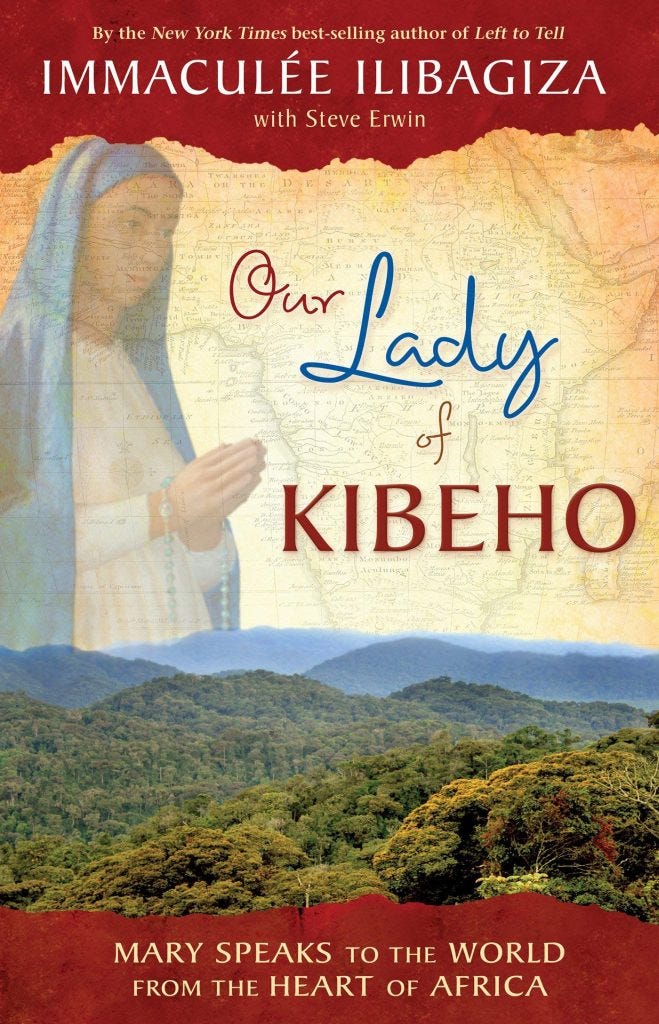
This is Immaculee’s experience of the only African, Church Approved apparitions of Our Lady that came before the Rwanda Genocide to warn the people to repent and to pray or their would be serious consequences.
Immaculee was raised in a devout Catholic family, but as she grew and became more educated she began to doubt her faith. When she began to learn about Our Lady in earlier Church approved apparitions, she began to have hope in her faith once again. She and her friends would pray and ask Mary to appear. Our Lady came eventually, but it was to three other school children in another village.
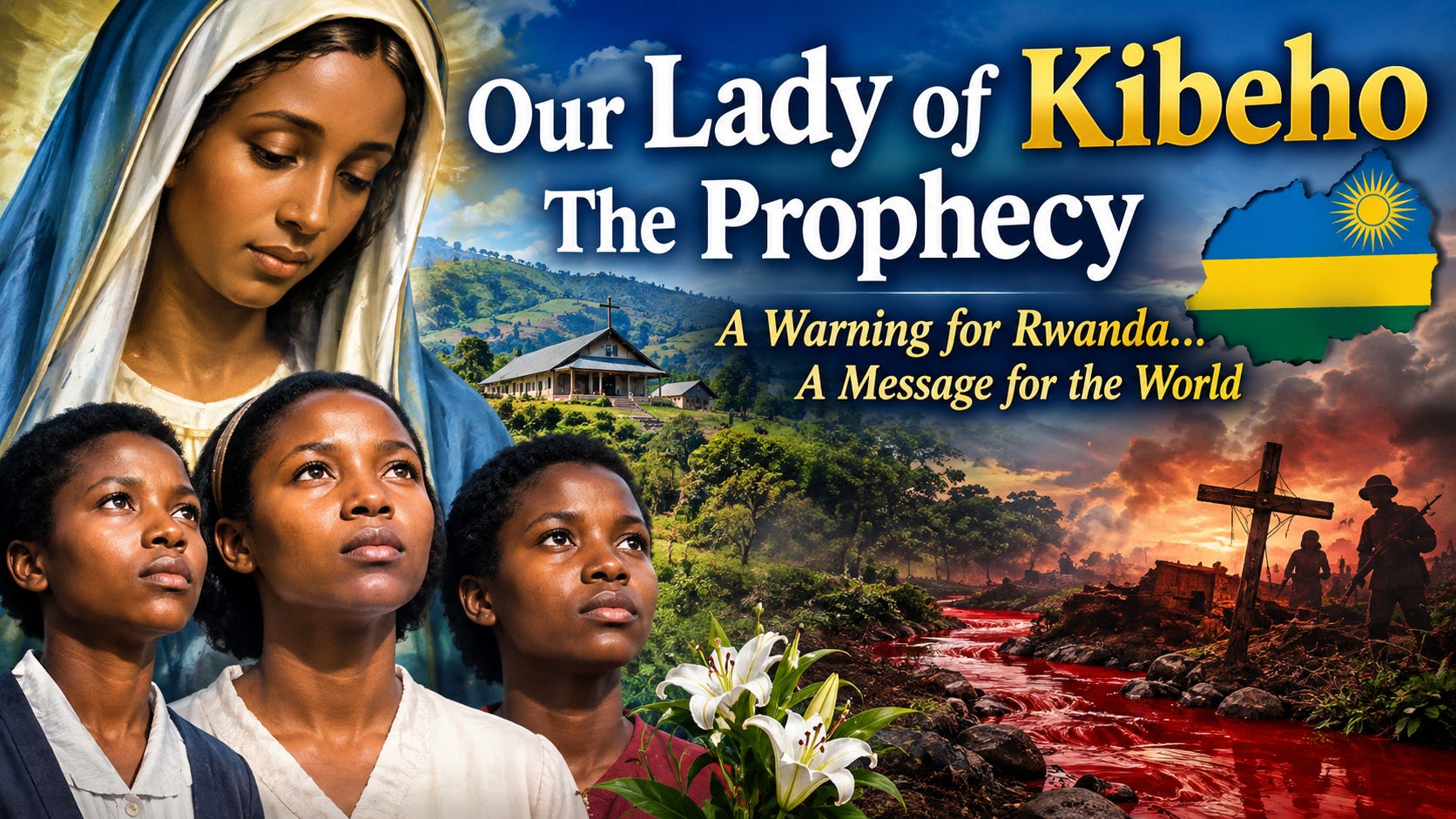
About thirteen years before the genocide Our Lady began to appear to three school children Alphonsine Mumureke, Nathalie Mukamazimpaka, and Marie Claire Mukangango from 1981-1989. Our Lady came with several urgent messages of the following:
Call to Conversion: Our Lady urged the visionaries and the people to turn away from sin and to engage in heartfelt prayer. Her messages emphasized the importance of forgiveness and reconciliation among the people.
Forewarning of Genocide: The visions were interpreted as prophetic, foreshadowing the Rwandan genocide that irrupted in 1994, resulting in the loss of approximately one million lives. The scenes witnessed by the visionaries were eerily similar to the events that unfolded during this tragic period.
Visions of Violence: One of the most significant aspects of the prophecy was a vision of a river of blood and scenes depicting violence and murder. This imagery served as a dire warning to the people of Rwanda.
Pray and Meditate: Our Lady pleaded that to obtain the grace of repentance, one must pray the daily Rosary, pray especially the Seven Sorrows Rosary and meditate on the Passion of Her Son Jesus Christ.
Finally, the messages delivered by Our Lady are still considered relevant not only to Rwanda but to myself , and to the entire world, highlighting the need for spiritual renewal and peace.
The prophecy of Our Lady of Kibeho serves as a reminder of the consequences of turning away from faith and the importance of unity and forgiveness especially in the difficulties of conflict.